How to Do Reverse Band Sumo Deadlift
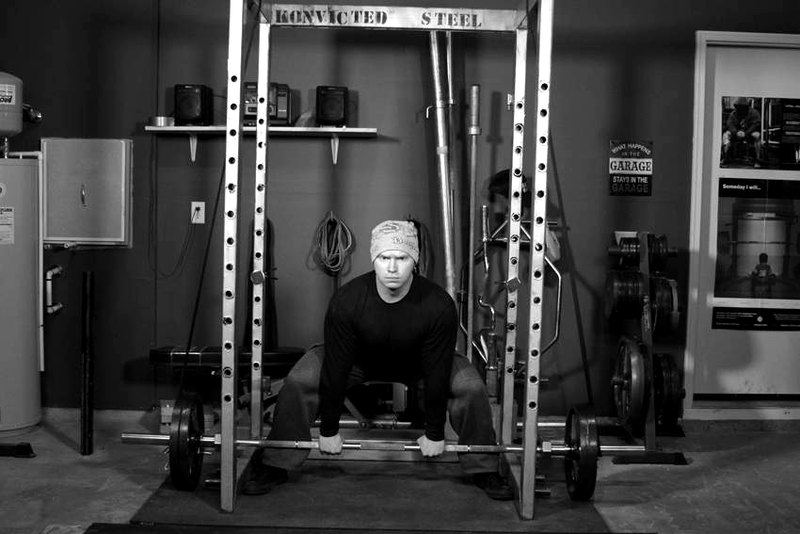
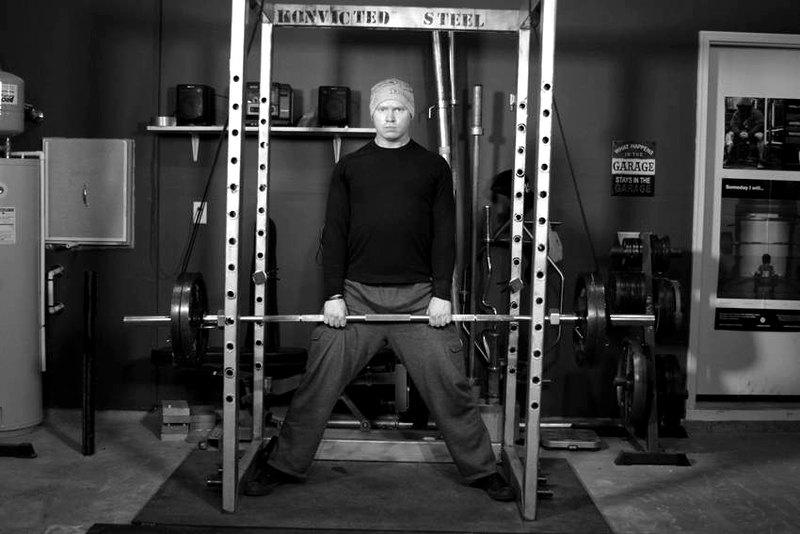
Start and end of one clean rep of Reverse Band Sumo Deadlift.
Quick facts
| Primary muscle | Hamstrings |
|---|---|
| Secondary muscles | Glutes, Quads, Calves, Forearms, Core, Back |
| Equipment | Barbell |
| Category | Powerlifting |
How to perform Reverse Band Sumo Deadlift
- Begin with a bar loaded on the floor inside of a power rack. Attach bands to the top of the rack, using either pegs or the frame itself. Attach the other end to the barbell.
- Approach the bar so that the bar intersects the middle of the feet. The feet should be set very wide, near the collars. Bend at the hips to grip the bar. The arms should be directly below the shoulders, inside the legs, and you can use a pronated grip, a mixed grip, or hook grip. Relax the shoulders, which in effect lengthens your arms.
- Take a breath, and then lower your hips, looking forward with your head with your chest up. Drive through the floor, spreading your feet apart, with your weight on the back half of your feet. Extend through the hips and knees.
- As the bar passes through the knees, lean back and drive the hips into the bar, pulling your shoulder blades together.
- Return the weight to the ground by bending at the hips and controlling the weight on the way down.
Muscles worked
- Hamstrings (primary): bends the knee and extends the hip through hinges and pulls.
- Glutes (secondary): extends and stabilises the hip — the engine behind hinges, squats and sprints.
- Quads (secondary): extends the knee to drive squats, lunges and jumps.
- Calves (secondary): points the foot to power push-off and steady the ankle.
- Forearms (secondary): controls your grip and keeps the wrist steady under load.
- Core (secondary): braces the trunk and resists twisting to protect the spine.
- Back (secondary): pulls the arms down and toward the torso and keeps the spine stable.
Sets & reps by goal
| Goal | Sets × reps | Load | Rest |
|---|---|---|---|
| Strength | 3–5 × 3–5 | Heavy (~85%+) | 2–3 min |
| Hypertrophy | 3–4 × 8–12 | Moderate (~65–75%) | 60–90 s |
| Endurance | 2–3 × 15–20 | Lighter (~50–60%) | 30–45 s |
Pick the row that matches your goal. If you're newer, anchor in the hypertrophy range while you groove the form.
Form tips
- Lead with the hips, keep a soft knee and hold a long, flat back through the hinge.
- Keep the bar path close and stacked over your mid-foot; letting it drift forward wastes force and loads the lower back.
- Rehearse your setup identically on every rep; dependable strength is built on one groove you can trust.
- Warm up the pattern with a couple of lighter, submaximal sets before your working sets.
Common mistakes
- Rounding the lower back to reach lower instead of hinging at the hips.
- Loading the bar heavier than your form allows and turning strict reps into a whole-body heave.
- Changing your setup rep to rep so the groove never becomes automatic.
Frequently asked questions
What muscles does Reverse Band Sumo Deadlift work?
Reverse Band Sumo Deadlift mainly works the hamstrings, with the glutes, quads, calves, forearms, core, back helping as secondary movers.
What equipment do I need for Reverse Band Sumo Deadlift?
Reverse Band Sumo Deadlift needs a barbell and plates (plus a rack or bench where the movement calls for one).
How many sets and reps should I do for Reverse Band Sumo Deadlift?
It depends on your goal: about 3–5 sets of 3–5 heavy reps for strength, 3–4 sets of 8–12 for muscle growth, or 2–3 sets of 15–20 for endurance. Pick the row that matches your goal. If you're newer, anchor in the hypertrophy range while you groove the form.
Train Reverse Band Sumo Deadlift with a coach in your pocket
Gimmy is your AI gym buddy — it programs Reverse Band Sumo Deadlift into recovery-aware workouts, tracks your sets, and shows one score that tells you if it's working.
Get early access