How to Do Lying T-Bar Row
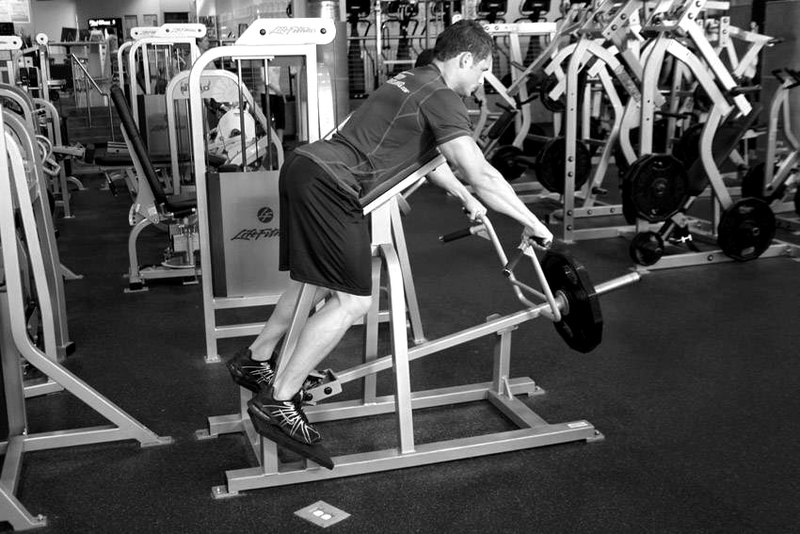
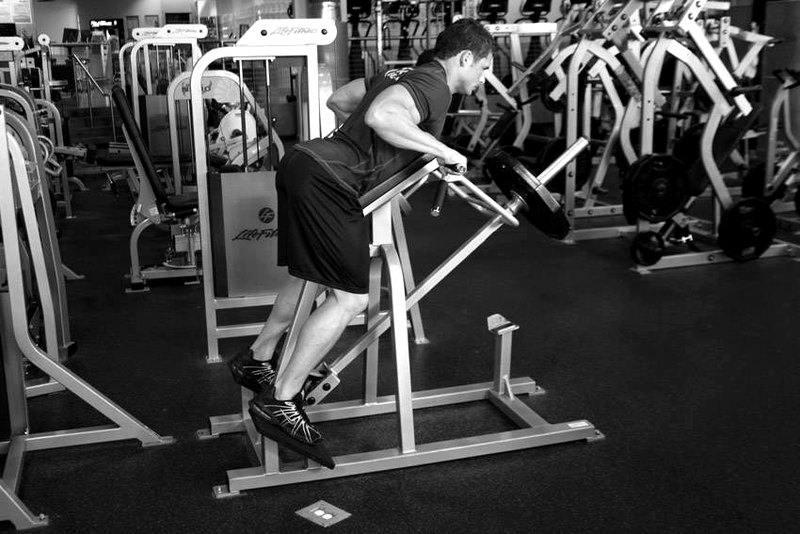
Start and end of one clean rep of Lying T-Bar Row.
Quick facts
| Primary muscle | Back |
|---|---|
| Secondary muscles | Biceps |
| Equipment | Machine |
| Category | Strength |
How to perform Lying T-Bar Row
- Load up the T-bar Row Machine with the desired weight and adjust the leg height so that your upper chest is at the top of the pad. Tip: In some machines all you can do is stand on the appropriate step that allows you to be at a height that has the upper chest at the top of the pad.
- Lay face down on the pad and grab the handles. You can either use a palms down, palms up, or palms in position depending on what part of your back you want to emphasize.
- Lift the bar off the rack and extend your arms in front of you. This will be your starting position.
- As you exhale slowly pull the weight up and squeeze your back at the top of the movement. Tip: Keep the upper arms as close to the torso as possible throughout the movement in order to better engage the back muscles. Also, do not lift your body off of the pad at any time and refrain from using the biceps to lift the weight.
- After a second contraction at the top of the movement, as you inhale, slowly go back down to the starting position.
- Repeat for the recommended amount of repetitions.
Muscles worked
- Back (primary): pulls the arms down and toward the torso and keeps the spine stable.
- Biceps (secondary): bends the elbow and turns the palm up during pulls and curls.
Sets & reps by goal
| Goal | Sets × reps | Load | Rest |
|---|---|---|---|
| Strength | 3–5 × 3–5 | Heavy (~85%+) | 2–3 min |
| Hypertrophy | 3–4 × 8–12 | Moderate (~65–75%) | 60–90 s |
| Endurance | 2–3 × 15–20 | Lighter (~50–60%) | 30–45 s |
Pick the row that matches your goal. If you're newer, anchor in the hypertrophy range while you groove the form.
Form tips
- Start each rep by pulling the shoulder blades in first, then drive with the elbows — think of pulling with the elbows, not the hands.
- Set the seat and pads so the machine's pivot lines up with the joint you're training before your first rep.
- Treat every rep the same — a repeatable setup and bar path is what lets you add weight safely over time.
- Stop a rep or two short of failure on most sets to keep form clean and recover faster.
Common mistakes
- Yanking with the arms and forgetting the back, so the biceps give out before the target muscle does.
- Leaving the seat or range on a setting that forces the joint into an awkward angle.
- Chasing weight jumps before the current load feels solid on every rep.
Frequently asked questions
What muscles does Lying T-Bar Row work?
Lying T-Bar Row mainly works the back, with the biceps helping as secondary movers.
What equipment do I need for Lying T-Bar Row?
Lying T-Bar Row needs the corresponding weight-stack or plate-loaded machine.
How many sets and reps should I do for Lying T-Bar Row?
It depends on your goal: about 3–5 sets of 3–5 heavy reps for strength, 3–4 sets of 8–12 for muscle growth, or 2–3 sets of 15–20 for endurance. Pick the row that matches your goal. If you're newer, anchor in the hypertrophy range while you groove the form.
Train Lying T-Bar Row with a coach in your pocket
Gimmy is your AI gym buddy — it programs Lying T-Bar Row into recovery-aware workouts, tracks your sets, and shows one score that tells you if it's working.
Get early access