How to Do Stairmaster
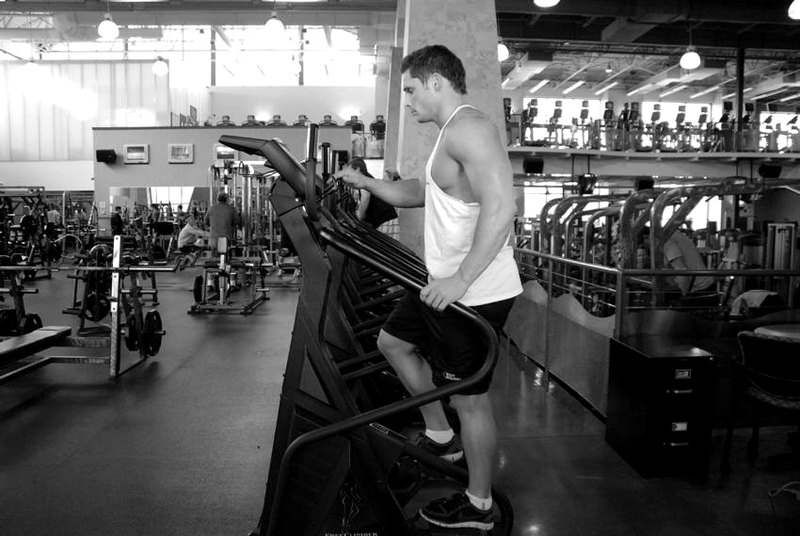
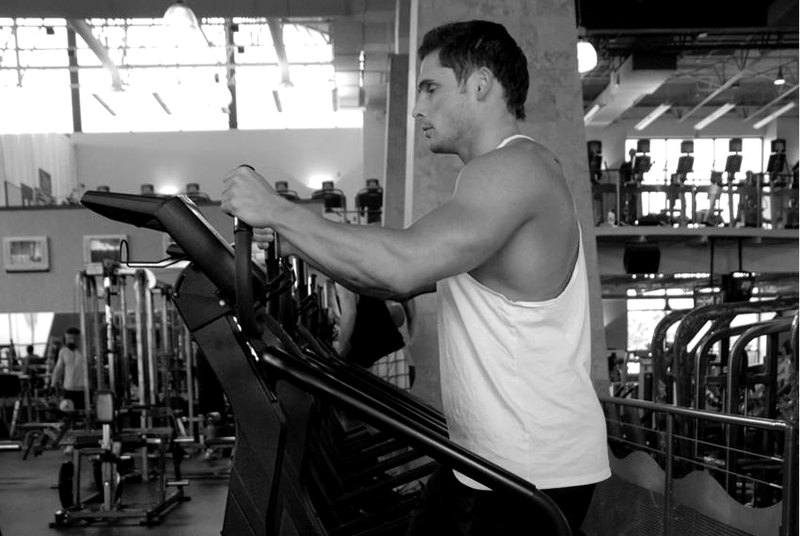
Start and end of one clean rep of Stairmaster.
Quick facts
| Primary muscle | Quads |
|---|---|
| Secondary muscles | Calves, Glutes, Hamstrings |
| Equipment | Machine |
| Category | Cardio |
How to perform Stairmaster
- To begin, step onto the stairmaster and select the desired option from the menu. You can choose a manual setting, or you can select a program to run. Typically, you can enter your age and weight to estimate the amount of calories burned during exercise.
- Pump your legs up and down in an established rhythm, driving the pedals down but not all the way to the floor. It is recommended that you maintain your grip on the handles so that you don't fall. The handles can be used to monitor your heart rate to help you stay at an appropriate intensity.
- Stairmasters offer convenience, cardiovascular benefits, and usually have less impact than running outside. They are typically much harder than other cardio equipment. A 150 lb person will typically burn over 300 calories in 30 minutes, compared to about 175 calories walking.
Muscles worked
- Quads (primary): extends the knee to drive squats, lunges and jumps.
- Calves (secondary): points the foot to power push-off and steady the ankle.
- Glutes (secondary): extends and stabilises the hip — the engine behind hinges, squats and sprints.
- Hamstrings (secondary): bends the knee and extends the hip through hinges and pulls.
Sets & reps by goal
| Goal | Sets × reps | Load | Rest |
|---|---|---|---|
| Strength | 3–5 × 3–5 | Heavy (~85%+) | 2–3 min |
| Hypertrophy | 3–4 × 8–12 | Moderate (~65–75%) | 60–90 s |
| Endurance | 2–3 × 15–20 | Lighter (~50–60%) | 30–45 s |
For conditioning, treat these as effort or time targets — rounds and intervals — rather than strict rep counts.
Form tips
- Keep the knees tracking in line with the toes and push the whole foot into the floor.
- Set the seat and pads so the machine's pivot lines up with the joint you're training before your first rep.
- Settle into a pace you can hold with good posture instead of sprinting the first minute and fading.
- Stop a rep or two short of failure on most sets to keep form clean and recover faster.
Common mistakes
- Letting the knees cave inward as you push out of the bottom.
- Leaving the seat or range on a setting that forces the joint into an awkward angle.
- Going all-out too early and losing form as the fatigue piles up.
Frequently asked questions
What muscles does Stairmaster work?
Stairmaster mainly works the quads, with the calves, glutes, hamstrings helping as secondary movers.
What equipment do I need for Stairmaster?
Stairmaster needs the corresponding weight-stack or plate-loaded machine.
How many sets and reps should I do for Stairmaster?
It depends on your goal: about 3–5 sets of 3–5 heavy reps for strength, 3–4 sets of 8–12 for muscle growth, or 2–3 sets of 15–20 for endurance. For conditioning, treat these as effort or time targets — rounds and intervals — rather than strict rep counts.
Train Stairmaster with a coach in your pocket
Gimmy is your AI gym buddy — it programs Stairmaster into recovery-aware workouts, tracks your sets, and shows one score that tells you if it's working.
Get early access