How to Do Seated Biceps
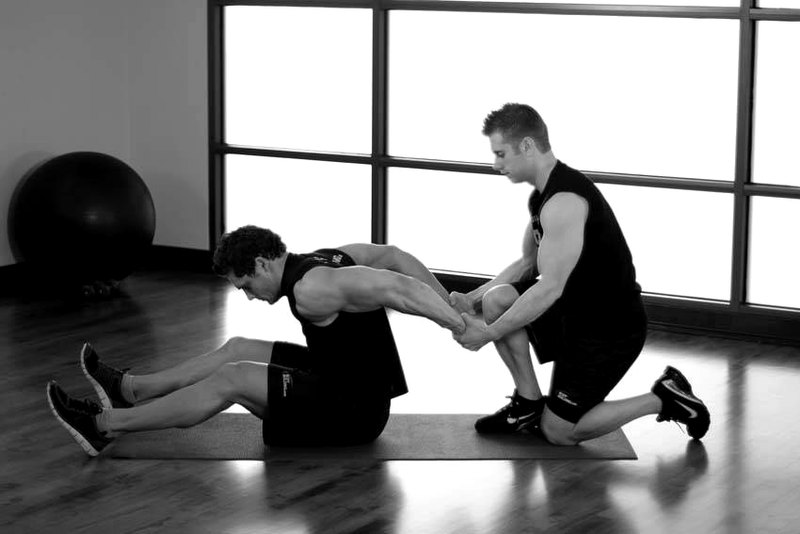
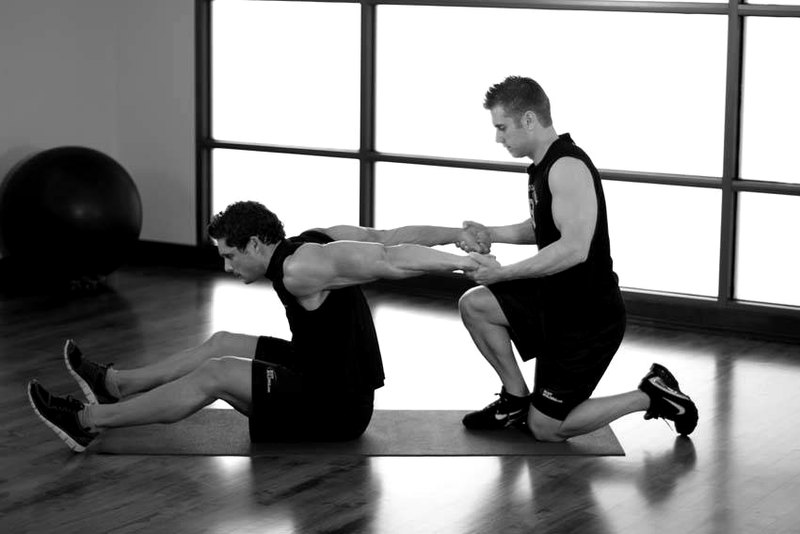
Start and end of one clean rep of Seated Biceps.
Quick facts
| Primary muscle | Biceps |
|---|---|
| Secondary muscles | Chest, Shoulders |
| Equipment | Bodyweight |
| Category | Stretching |
How to perform Seated Biceps
- Sit on the floor with your knees bent and your partner standing behind you. Extend your arms straight behind you with your palms facing each other. Your partner will hold your wrists for you. This will be the starting position.
- Attempt to flex your elbows, while your partner prevents any actual movement.
- After 10-20 seconds, relax your arms while your partner gently pulls your wrists up to stretch your biceps. Be sure to let your partner know when the stretch is appropriate to prevent injury or overstretching.
Muscles worked
- Biceps (primary): bends the elbow and turns the palm up during pulls and curls.
- Chest (secondary): pushes the arms forward and across the body — your horizontal pressing power.
- Shoulders (secondary): raises and rotates the arms and drives everything overhead.
Sets & reps by goal
| Goal | Sets × reps | Load | Rest |
|---|---|---|---|
| Strength | 3–5 × 3–5 | Heavy (~85%+) | 2–3 min |
| Hypertrophy | 3–4 × 8–12 | Moderate (~65–75%) | 60–90 s |
| Endurance | 2–3 × 15–20 | Lighter (~50–60%) | 30–45 s |
As a mobility drill, hold each position for 20–40 seconds (or move slowly for reps) rather than training it to a heavy load.
Form tips
- Keep the upper arm still and pinned to your side so the movement happens only at the elbow.
- Own the largest range you can control with clean form before you chase extra reps.
- Ease in until you feel mild tension, never pain, and breathe out as you sink a little deeper.
- Control the lowering phase — a 2–3 second descent builds more than dropping the weight.
Common mistakes
- Swinging the torso to fling the weight up instead of actually curling it.
- Cutting the range short to squeeze out extra reps instead of owning each full one.
- Bouncing into the stretch instead of holding it steadily.
Frequently asked questions
What muscles does Seated Biceps work?
Seated Biceps mainly works the biceps, with the chest, shoulders helping as secondary movers.
What equipment do I need for Seated Biceps?
None — Seated Biceps is a bodyweight movement, so you only need your bodyweight and a little space.
How many sets and reps should I do for Seated Biceps?
It depends on your goal: about 3–5 sets of 3–5 heavy reps for strength, 3–4 sets of 8–12 for muscle growth, or 2–3 sets of 15–20 for endurance. As a mobility drill, hold each position for 20–40 seconds (or move slowly for reps) rather than training it to a heavy load.
Train Seated Biceps with a coach in your pocket
Gimmy is your AI gym buddy — it programs Seated Biceps into recovery-aware workouts, tracks your sets, and shows one score that tells you if it's working.
Get early access