How to Do Dumbbell Clean
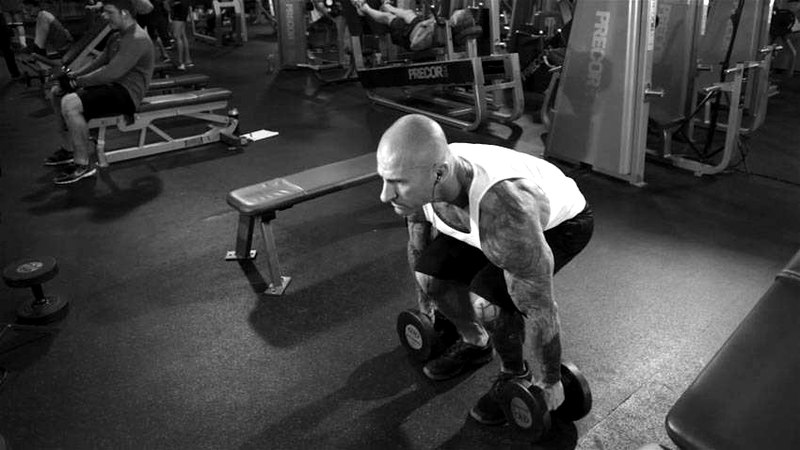
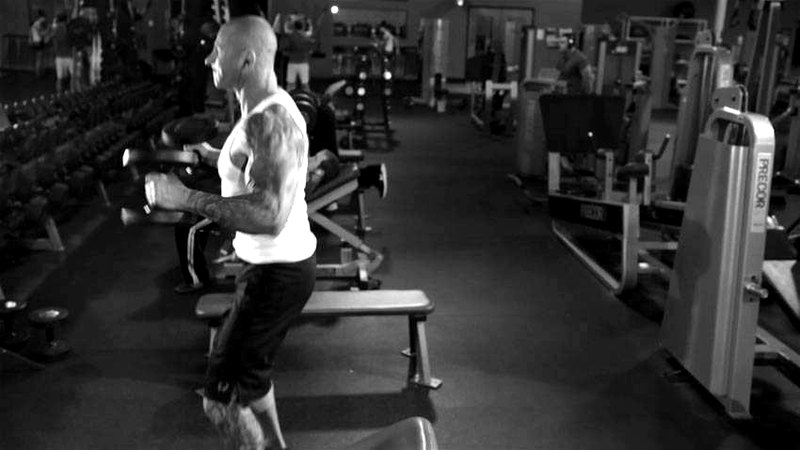
Start and end of one clean rep of Dumbbell Clean.
Quick facts
| Primary muscle | Hamstrings |
|---|---|
| Secondary muscles | Calves, Forearms, Glutes, Core, Quads, Shoulders, Back |
| Equipment | Dumbbell |
| Category | Strength |
How to perform Dumbbell Clean
- Begin standing with a dumbbell in each hand with your feet shoulder width apart.
- Lower the weights to the floor by flexing at the hips and knees, pushing your hips back until the dumbbells reach the floor. This will be your starting position.
- To initiate the movement, violently jump upward by extending the hips, knees, and ankles to acclerate the weights upward. Maintaining a neutral grip on the dumbbells, keep the arms straight until full extension is reached.
- After full extension, rebend the hips and knees to receive the weight in a squat position. Allow the arms to bend, guiding the dumbbells to your shoulders.
- Upon receiving the weight in the squat position, extend the hips and knees to finish in a standing position with the weights on your shoulders.
Muscles worked
- Hamstrings (primary): bends the knee and extends the hip through hinges and pulls.
- Calves (secondary): points the foot to power push-off and steady the ankle.
- Forearms (secondary): controls your grip and keeps the wrist steady under load.
- Glutes (secondary): extends and stabilises the hip — the engine behind hinges, squats and sprints.
- Core (secondary): braces the trunk and resists twisting to protect the spine.
- Quads (secondary): extends the knee to drive squats, lunges and jumps.
- Shoulders (secondary): raises and rotates the arms and drives everything overhead.
- Back (secondary): pulls the arms down and toward the torso and keeps the spine stable.
Sets & reps by goal
| Goal | Sets × reps | Load | Rest |
|---|---|---|---|
| Strength | 3–5 × 3–5 | Heavy (~85%+) | 2–3 min |
| Hypertrophy | 3–4 × 8–12 | Moderate (~65–75%) | 60–90 s |
| Endurance | 2–3 × 15–20 | Lighter (~50–60%) | 30–45 s |
Pick the row that matches your goal. If you're newer, anchor in the hypertrophy range while you groove the form.
Form tips
- Lead with the hips, keep a soft knee and hold a long, flat back through the hinge.
- Each side works on its own, so match the depth and speed of both arms and don't let the stronger side take over.
- Treat every rep the same — a repeatable setup and bar path is what lets you add weight safely over time.
- Breathe out on the effort and in on the return, keeping one steady rhythm across the set.
Common mistakes
- Rounding the lower back to reach lower instead of hinging at the hips.
- Letting the dumbbells drift apart or clang together at the top instead of controlling the path.
- Chasing weight jumps before the current load feels solid on every rep.
Frequently asked questions
What muscles does Dumbbell Clean work?
Dumbbell Clean mainly works the hamstrings, with the calves, forearms, glutes, core, quads, shoulders, back helping as secondary movers.
What equipment do I need for Dumbbell Clean?
Dumbbell Clean needs a pair of dumbbells.
How many sets and reps should I do for Dumbbell Clean?
It depends on your goal: about 3–5 sets of 3–5 heavy reps for strength, 3–4 sets of 8–12 for muscle growth, or 2–3 sets of 15–20 for endurance. Pick the row that matches your goal. If you're newer, anchor in the hypertrophy range while you groove the form.
Train Dumbbell Clean with a coach in your pocket
Gimmy is your AI gym buddy — it programs Dumbbell Clean into recovery-aware workouts, tracks your sets, and shows one score that tells you if it's working.
Get early access