How to Do Chin-Up
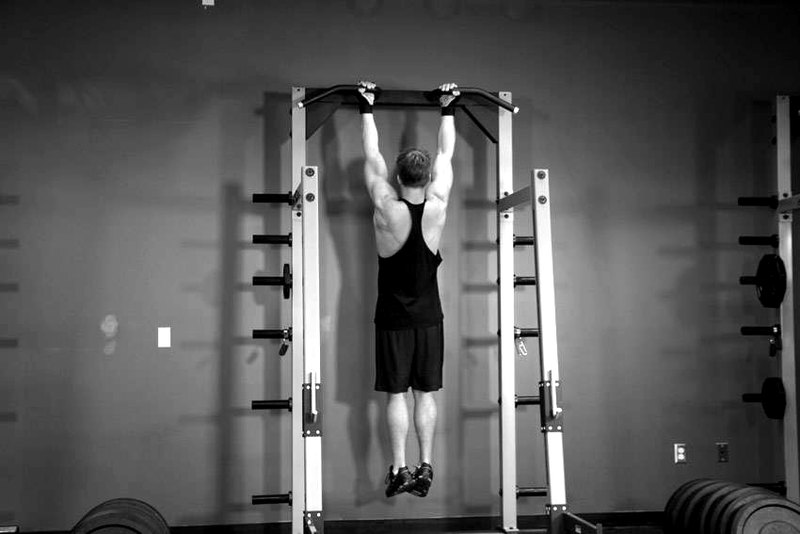
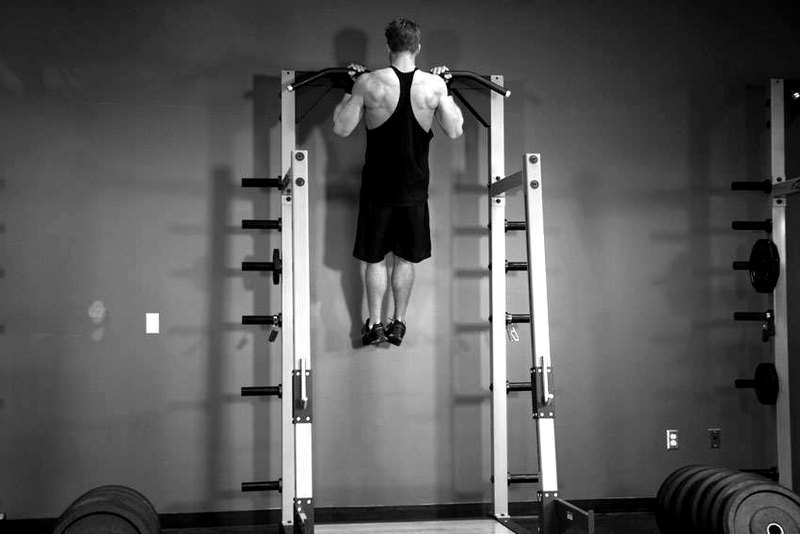
Start and end of one clean rep of Chin-Up.
Quick facts
| Primary muscle | Back |
|---|---|
| Secondary muscles | Biceps, Forearms |
| Equipment | Bodyweight |
| Category | Strength |
How to perform Chin-Up
- Grab the pull-up bar with the palms facing your torso and a grip closer than the shoulder width.
- As you have both arms extended in front of you holding the bar at the chosen grip width, keep your torso as straight as possible while creating a curvature on your lower back and sticking your chest out. This is your starting position. Tip: Keeping the torso as straight as possible maximizes biceps stimulation while minimizing back involvement.
- As you breathe out, pull your torso up until your head is around the level of the pull-up bar. Concentrate on using the biceps muscles in order to perform the movement. Keep the elbows close to your body. Tip: The upper torso should remain stationary as it moves through space and only the arms should move. The forearms should do no other work other than hold the bar.
- After a second of squeezing the biceps in the contracted position, slowly lower your torso back to the starting position; when your arms are fully extended. Breathe in as you perform this portion of the movement.
- Repeat this motion for the prescribed amount of repetitions.
Muscles worked
- Back (primary): pulls the arms down and toward the torso and keeps the spine stable.
- Biceps (secondary): bends the elbow and turns the palm up during pulls and curls.
- Forearms (secondary): controls your grip and keeps the wrist steady under load.
Sets & reps by goal
| Goal | Sets × reps | Load | Rest |
|---|---|---|---|
| Strength | 3–5 × 3–5 | Heavy (~85%+) | 2–3 min |
| Hypertrophy | 3–4 × 8–12 | Moderate (~65–75%) | 60–90 s |
| Endurance | 2–3 × 15–20 | Lighter (~50–60%) | 30–45 s |
Bodyweight movement: once you own the top of a rep range, progress by slowing the tempo, pausing at the hardest point, or moving to a harder variation instead of adding load.
Form tips
- Start each rep by pulling the shoulder blades in first, then drive with the elbows — think of pulling with the elbows, not the hands.
- Own the largest range you can control with clean form before you chase extra reps.
- Treat every rep the same — a repeatable setup and bar path is what lets you add weight safely over time.
- Warm up the pattern with a couple of lighter, submaximal sets before your working sets.
Common mistakes
- Yanking with the arms and forgetting the back, so the biceps give out before the target muscle does.
- Cutting the range short to squeeze out extra reps instead of owning each full one.
- Chasing weight jumps before the current load feels solid on every rep.
Frequently asked questions
What muscles does Chin-Up work?
Chin-Up mainly works the back, with the biceps, forearms helping as secondary movers.
What equipment do I need for Chin-Up?
None — Chin-Up is a bodyweight movement, so you only need your bodyweight and a little space.
How many sets and reps should I do for Chin-Up?
It depends on your goal: about 3–5 sets of 3–5 heavy reps for strength, 3–4 sets of 8–12 for muscle growth, or 2–3 sets of 15–20 for endurance. Bodyweight movement: once you own the top of a rep range, progress by slowing the tempo, pausing at the hardest point, or moving to a harder variation instead of adding load.
Train Chin-Up with a coach in your pocket
Gimmy is your AI gym buddy — it programs Chin-Up into recovery-aware workouts, tracks your sets, and shows one score that tells you if it's working.
Get early access